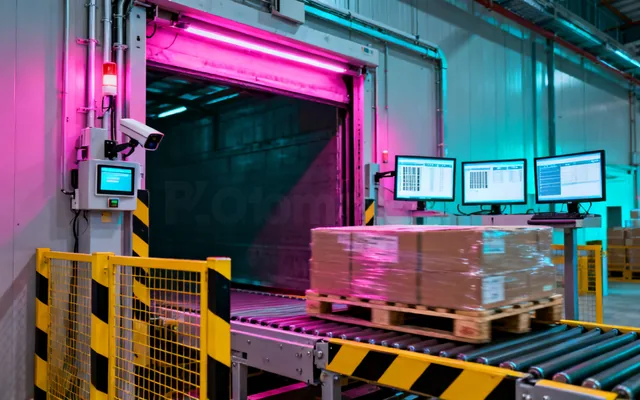
Receive — induction and host release
Qualify ASN quality, load identity, quarantine holds and buffer capacity before WCS releases cartons or pallets into the network. Peak inbound windows stay paired with accumulation limits and exception recovery.

Balance robotics, controls and data interfaces with functional safety, serviceability and a rate claim that still holds when SKU mix, buffers and exceptions collide.
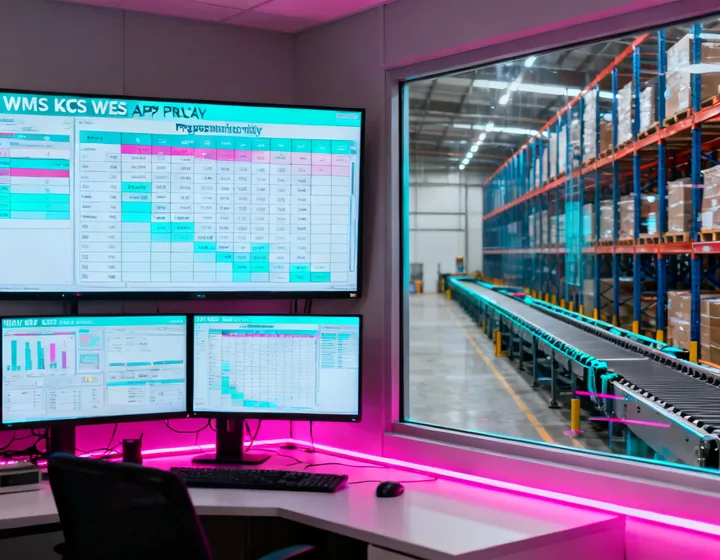
Each workstream converts an operational concern into measurable inputs, interface owners and evidence that operations, controls, maintenance and EHS teams can examine together before capital freezes.
Document WMS, WCS, WES, PLC and fleet-management ownership for commands, handshakes, alarms and restart authority before FAT scripts lock the message list.
Validate rate against SKU mix, order profile, peak window, accumulation, replenishment and exception recovery so a short burst is not mistaken for sustained shipping capacity.
Protect live fulfillment with controlled cutover, fallback states, commissioning windows and measurable acceptance gates when brownfield zones stay online.
Keep maintenance access, diagnostics, critical spares and recovery procedures visible before operational handover, including mean-time-to-repair exposure on critical merges.
Cards follow Receive through Ship rather than stacking abstract technology labels. Open an inquiry when load units, destinations and peak assumptions are known.
Qualify ASN quality, load identity, quarantine holds and buffer capacity before WCS releases cartons or pallets into the network. Peak inbound windows stay paired with accumulation limits and exception recovery.
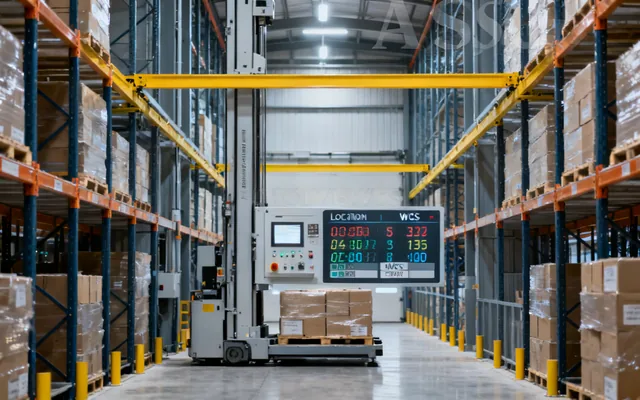
Document who owns putaway rules, selectivity, fire-access constraints and replenishment triggers across WMS and WCS. Density gains are reviewed with maintenance access and expansion paths, not only cube utilization.
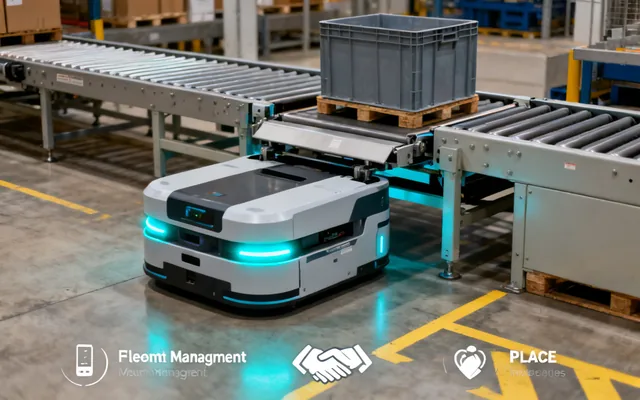
Clarify AGV/AMR task assignment, PLC confirmations, timeouts and alarm ownership when mobile robots share routes with conveyors. Buffer occupancy and fallback states are written before go-live invents procedures.
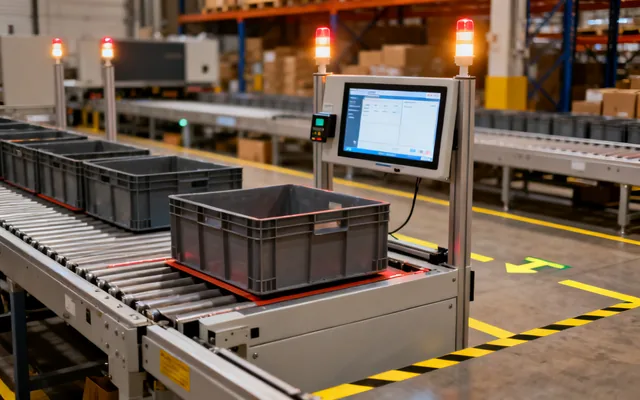
Tie order lines per hour claims to SKU velocity, multi-line share, replenishment cadence and exception recovery. Keep WES work presentation aligned with the physical station geometry operators will use.
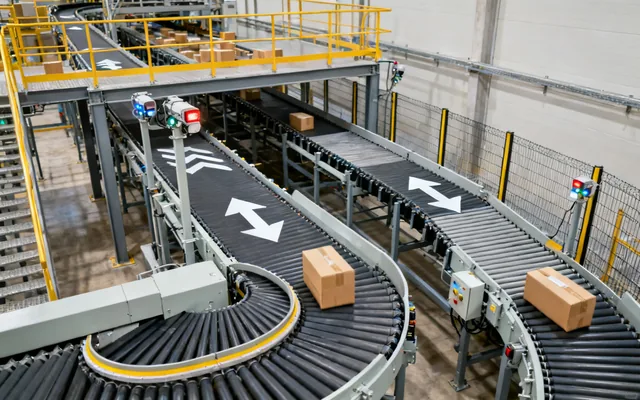
Map divert confirmation, recirculation and induction balance to destination capacity. Merge logic and zero-pressure accumulation boundaries are reviewed as control responsibilities, not only mechanical options.
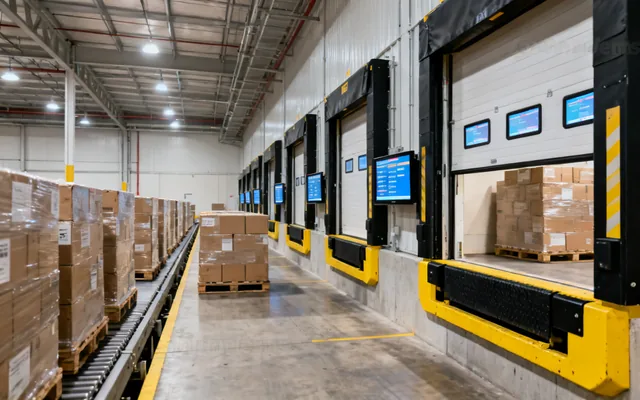
Connect wave release to door capacity, trailer constraints and brownfield cutover windows. Acceptance cases include fallback states so live outbound waves stay protected when a subsystem cannot confirm.
Each column states one metric, one test boundary and one evidence class. Planning-range brand figures are not treated as certified public claims.
Cartons/hour or order lines/hour with SKU mix, peak duration, accumulation and replenishment assumptions stated.
Boundary: scenario-specificIntegrated software and equipment behavior under controlled loads, planned disturbances and a versioned signal dictionary.
Evidence: signed protocolInstalled end-to-end flow with site geometry, actual loads, buffer starts and recovery observation.
Evidence: open-item registerIsolation, diagnostics, critical spares and restart ownership documented before operational handover.
Evidence: handover packSKU depth, peak factor, temperature and pallet/tote mix must travel together. Mobile cards keep the same fields when the matrix collapses.
| Vertical | SKU depth | Peak factor | Temperature | Load-unit mix |
|---|---|---|---|---|
| E-commerce fulfillment | Very high | Promotion waves | Ambient | Carton / tote heavy |
| Grocery distribution | High | Store cutoffs | Ambient + chilled | Case / tote |
| Cold chain | Medium-high | Door-window limited | Chilled / frozen | Insulated case / tote |
| Manufacturing staging | Medium | Takt spikes | Ambient | Tote / stillage |
| Multi-client 3PL nodes | Client-variable | Shared-zone contention | Ambient / mixed | Mixed pallet / tote / carton |
SKU depth: Very high
Peak factor: Promotion waves
Temperature: Ambient
Load-unit mix: Carton / tote heavy
SKU depth: High
Peak factor: Store cutoffs
Temperature: Ambient + chilled
Load-unit mix: Case / tote
SKU depth: Medium-high
Peak factor: Door-window limited
Temperature: Chilled / frozen
Load-unit mix: Insulated case / tote
SKU depth: Medium
Peak factor: Takt spikes
Temperature: Ambient
Load-unit mix: Tote / stillage
SKU depth: Client-variable
Peak factor: Shared-zone contention
Temperature: Ambient / mixed
Load-unit mix: Mixed pallet / tote / carton
A useful concept review starts with actual load units, SKU velocity and demand patterns. Share ranges where final figures are unavailable; assumptions can be marked for later validation against interface timing and buffer occupancy.
Open the project brief