WES and WCS Buying: Why I Split the Decision by Procurement Scenario, Not Feature Grids
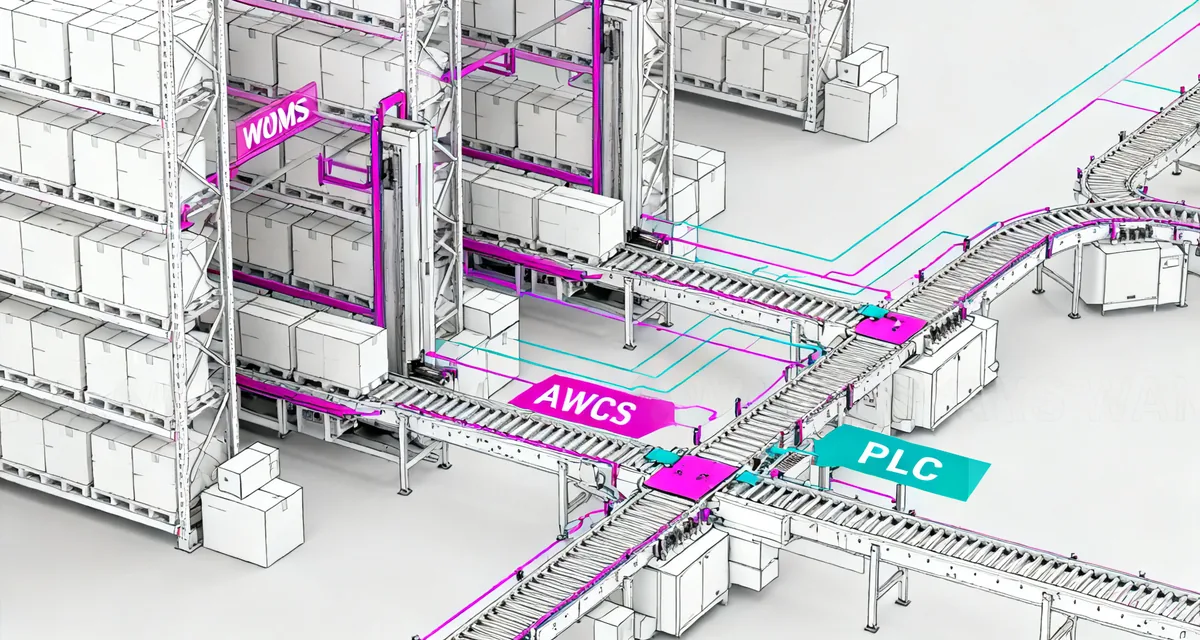
Most advice on buying warehouse execution systems (WES) and warehouse control systems (WCS) starts in the wrong place. It starts with a feature comparison grid. I've run three of those grids over the past two years, and every time the grid came back different — because I wasn't actually buying the same product.
I'm the procurement manager at a 400-person fulfillment company. I've managed our warehouse and automation technology budget (about $1.4M annually now, up from $800K when I took this over) for six years, negotiated with roughly 30 vendors in that span, and logged every quote into our TCO tracker. In the last 18 months I've walked through three distinct buying paths:
- Scenario A: A fully integrated WMS–WES–WCS suite from a single vendor
- Scenario B: Bulk WES licensing, either across multiple sites or for resale
- Scenario C: Buying WCS as OEM or as a private-label product
If you compare those three side by side, you'll almost certainly buy the wrong thing. The commercial terms, support model, and roadmap commitments are not the same — even when the underlying engine is. Here's how I'd split it, and what actually moves cost in each case.
Why I Sort by Procurement Mode Before Sorting by Feature
It's tempting to think the product on the demo screen is the product you're buying. But the same WES badge can come with wildly different terms depending on whether you're signing a direct license, a bulk agreement, or a private-label deal. In our 2023 spending audit, I pulled every invoice that touched warehousing software — licenses, implementation hours, integration time, ongoing support — across three years. The cost curve looked completely different vendor by vendor, and the difference was almost never the license line.
So before you compare, split. Here's how I split it, and what each path actually costs.
Scenario A: You're Evaluating a Full WMS–WES–WCS Suite
This is the path most mid-size warehouses end up on. You buy the whole stack from one vendor — usually a company like Körber Supply Chain, which is headquartered in Hamburg, Germany, has grown partly through acquisitions like HighJump, and now markets an integrated WMS, WES, and WCS portfolio under one brand (that's the public profile as of January 2025; things can change, obviously).
Everything I'd read said you should always negotiate with a single vendor to capture integration value. In practice, I found it was more complicated than that. Yes, single-vendor integration genuinely reduces friction at the WES/WCS layer. But it also locks your whole stack to one license rhythm and one roadmap calendar — and that shape affects your year-two and year-three cost far more than the initial quote.
What actually drives total cost in this scenario, based on our own tracking:
- Implementation hours — typically 40–60% of the first-year budget
- Integration interfaces — every connection point (ERP, WES, WCS, robot controllers, conveyor controllers) runs on hourly rates that stack up quietly
- Upgrade cadence — more frequent releases mean more frequent re-validation time
- Support tier — buying the integrated suite without a meaningful support tier is almost always a bad saving
Honestly, for multi-site operations with real automation complexity, I'd go this route again. For a single site with basic conveyor and AS/RS, a full integrated suite starts to feel like overkill — and I say that as someone who usually leans toward consolidation.
Scenario B: You're Buying WES in Bulk
Bulk WES purchasing — also called wholesale WES licensing — means you authorize once and deploy across multiple sites, distribute to sub-organizations, or resell as an integration partner. The sticker looks cheaper. Sometimes it is. But bulk warehouse execution system licensing has its own hidden costs.
It took me three years and roughly 40 vendor evaluations to understand that bulk terms rarely escape seat-based or volume-based escalators. You may pay a lower per-unit number on the sheet, but every time you cross a new monthly volume threshold, you're back at the table.
The most frustrating part of bulk licensing: the metric that tripped us up wasn't the one we'd negotiated against. We signed what looked like an unlimited agreement in 2023. Six months in, when we cleared our volume ceiling, the vendor politely reminded us that "unlimited" covered seats, not throughput. That added about $22,000 to a quarterly budget line we hadn't planned for. After the second time we got surprised by a volume threshold, I started asking "what's NOT included?" before I'd even look at the price sheet.
To be fair, bulk WES is still the right call for multi-site operators and integrators — the per-unit economics genuinely work when you're spreading licenses across enough volume. Just get every metering dimension in writing: seats, throughput, integrations, and support headcount. "Wholesale" means different things vendor to vendor.
Scenario C: WCS as OEM vs. Private Label
This is the scenario that gets misread most often. People assume OEM and private label are just brand-decal choices. They aren't. From a procurement standpoint, they represent two different control commitments and two different risk profiles.
OEM WCS
In an OEM arrangement, you buy the vendor's WCS, ship it under your own brand, and often support end customers yourself. The vendor maintains the core codebase. You get stability and lower R&D overhead — but you give up most roadmap influence.
Private-Label WCS
In a private-label deal, you buy the product but the vendor typically allows much deeper customization, extension, or modification. The tradeoff is that you take custody of upgrades, defect fixes, and compatibility testing.
I have mixed feelings about both. On one hand, OEM feels safer — fewer engineering hours, shorter compliance cycles, canned release schedules. On the other hand, if you actually have product engineering capacity (or you're building a distinctive integration layer), private label wins hard over a 3–5 year horizon, provided you cost the engineering hours properly.
The most common mistake I see: choosing private label without the engineering bench to maintain a fork. When we modeled that path in late 2024, the real cost ran roughly 30% above an equivalent OEM agreement once engineering time was honestly accounted for.
How to Tell Which Scenario You're In
Here's a quick diagnostic I'd put into an actual RFP or procurement brief. Trust me on this — it's saved me from more than one wrong-signed contract.
- Single site, moderate automation: You're probably in Scenario A — but consider unbundling the suite. Compare the all-in quote against a WMS plus a focused WES package, and check whether the integration savings actually show up on the line items.
- Multi-site or serving multiple clients: Scenario B. Before you sign, write every metering dimension into the contract — including the ones that sound obvious.
- You're an integrator or product company building your own offer: Scenario C. If you don't have an engineering team that can own a fork, choose OEM. If you do, cost the full engineering load, not just the license.
One last question I always land on: twelve months from now, who holds the leverage? A vendor with a stable roadmap and a transparent support tier is usually cheaper by year three than a vendor who quoted 15% less at signing (this was true when I ran the numbers in Q1 2025, and I doubt it's changed much). Prices that look clean on day one tend to hide their second act. The ones that show the second act up front are worth paying for.

I’m Jane Smith, a senior content writer with over 15 years of experience in the packaging and printing industry. I specialize in writing about the latest trends, technologies, and best practices in packaging design, sustainability, and printing techniques. My goal is to help businesses understand complex printing processes and design solutions that enhance both product packaging and brand visibility.