Why I Trust a Warehouse Vendor Who Says 'We Don't Do That' More Than One That Promises Everything
-
Argument 1: The All-in-One Pitch Is a Risk Transfer, Not a Convenience
-
Argument 2: A Vendor That Can't Name Its Weakness Usually Can't Name Its Strength Either
-
Argument 3: OEM and Private-Label Flexibility Is Not the Same as Full-Stack Depth
-
But Doesn't One Vendor Reduce My Integration Risk?
-
Bottom Line
The most dangerous warehouse system vendor isn't the one with limited capability. It's the one that claims to have no limits at all.
I'm a supply chain integration manager. I handle warehouse system procurement orders for a mid-sized 3PL, and I've been doing it for about nine years. In that time, I've personally made—and documented—11 significant mistakes, totaling roughly $240,000 in wasted budget. My team now runs everything through a pre-check list I built, mostly so I stop being the reason we miss deadlines.
Here's the thing I've learned the hard way: a vendor who says "we don't do that" is worth more to me than a vendor who says "we do everything." That's not a philosophical preference. That's a $47,000 invoice I paid in 2021 for a promise nobody could keep.
Argument 1: The All-in-One Pitch Is a Risk Transfer, Not a Convenience
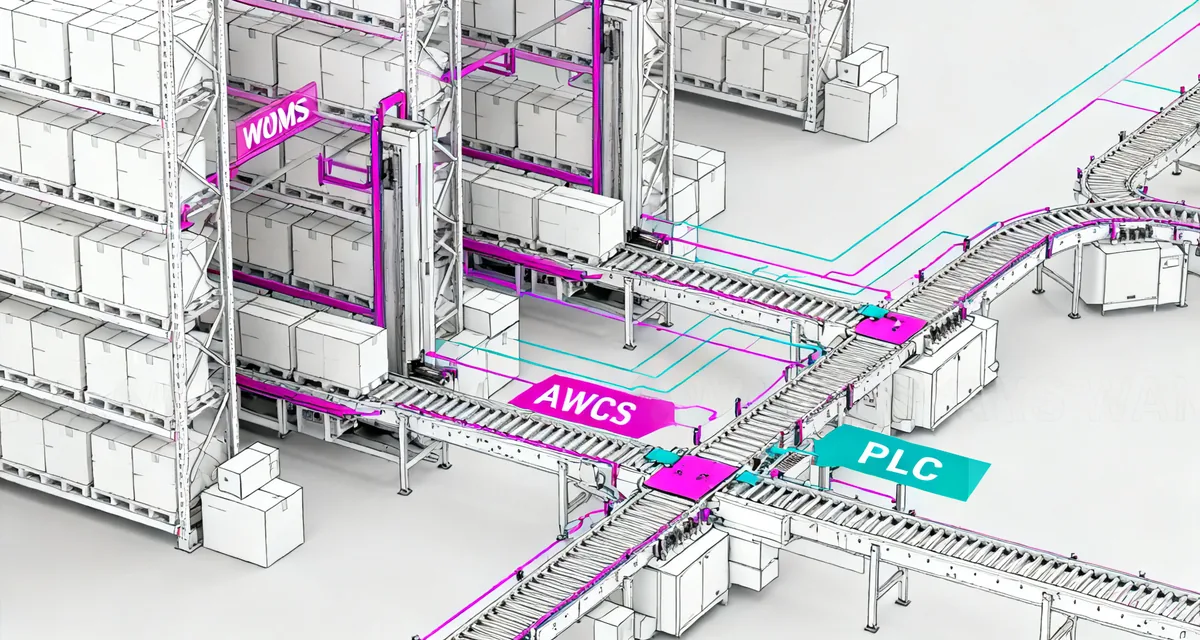
In November 2021, we signed with a vendor that pitched a fully integrated WES, WCS, and WMS stack under one roof. The slide deck was gorgeous. Every box was connected. Every arrow pointed to "single throat to choke"—which, looking back, was the only accurate part of the presentation.
What actually happened: the WCS layer was subcontracted to a third party they didn't mention until week six. The WMS integration we were promised as "native" turned out to be a custom build nobody had scoped. Four months past the original go-live, we were still patching middleware. Final damage: $47,000 in change orders, plus a client relationship I'm still repairing.
Looking back, I should have asked a much simpler question in the first meeting: "What part of this stack does your team actually build, and what part do you resell?" At the time, I didn't ask because—honestly—I didn't want to seem like I was questioning their capability. That instinct was the mistake, not the question.
A vendor that's honest about its scope is doing you a favor. You can plan around a boundary. You can't plan around a promise.
Argument 2: A Vendor That Can't Name Its Weakness Usually Can't Name Its Strength Either
This is the part that surprises people. When I evaluate WMS integration manufacturers now, I don't start with the feature matrix. I ask them directly: "Where does your product stop being the right fit?"
The answers tell you everything. A focused vendor will describe specific scenarios—say, a bulk warehouse execution system used in operations without a fixed conveyor layout—where their tool isn't the best choice. They'll point you toward an integrator who handles that edge case better than they do. That's not a sales loss for them. That's a credibility gain.
The vendors that stutter and pivot—usually landing on "well, we can customize anything"—are the ones that dilute their engineering resources across a dozen half-built modules. I've seen this pattern three times in the last two years alone. It never ends with a clean deployment.
Put another way: the deeper a vendor's genuine specialization, the sharper the line they can draw around it. A blunt instrument can't draw a line. It just hits everything at the same force.
"We don't build the conveyor control layer in-house. We integrate with the top three vendors who do. If you're buying that from us as a package, understand you're buying our integration, not our hardware."
I'm paraphrasing a conversation I had in early 2024, but that's the shape of an honest answer. I remember it because it's the kind of statement that gets a vendor onto my shortlist before they've even shown me a demo.
Argument 3: OEM and Private-Label Flexibility Is Not the Same as Full-Stack Depth
This one caught me off guard, and it's relevant if you're sourcing bulk warehouse execution systems or exploring warehouse control system private label options.
I used to assume that a vendor offering OEM or private-label flexibility automatically had deep product capability underneath. It sounds logical—you can't white-label what you don't actually build, right? Wrong. What you can do is white-label an integration layer around someone else's core engine. That's a legitimate business model. It's just not the same product as a fully proprietary stack, and it changes your support and roadmap exposure significantly.
So now I ask two separate questions that used to be one:
- "What's the source of the execution engine underneath?" Proprietary, licensed, or a subcontracted build?
- "If I need a customization in 18 months, whose roadmap does it live on?" Yours, a partner's, or nobody's?
Neither answer is automatically wrong. But the mismatch between what I assumed and what a private-label arrangement actually meant—that's where I've seen procurement teams (including mine) end up underwater. The vendor wasn't lying. We just weren't asking the second question.
But Doesn't One Vendor Reduce My Integration Risk?
This is the pushback I get every time I make this argument, usually from a procurement lead or a CFO who's tired of managing five contracts. "Isn't it simpler to buy from one vendor?"
Yes, it's simpler. It's not safer. Those are different things.
When a single vendor promises the full WES, WCS, and WMS integration, they're not eliminating integration risk. They're absorbing it, marking it up, and handing it back to you as a line item you can't audit. When the integration breaks—and something always does—you're negotiating with one party who controls all the information. That's not leverage. That's dependency dressed as convenience.
The trade-off is real, though, and I won't pretend otherwise. Managing two or three specialists means more coordination on your side, more meetings, and a longer procurement cycle. If your operation is small enough that a single mid-tier vendor genuinely covers your scope, that's a legitimate choice. I've made it myself on smaller projects.
For a bulk warehouse execution system deployment, though—the kind with real throughput commitments and compliance exposure—I'll take the coordination overhead every time. The checklist I built after that 2021 disaster has caught 47 potential scope gaps in the past 18 months. Twenty-three of those were vendors quietly treating a partner product as their own. That's not a hypothetical risk. That's a pattern.
Bottom Line
I'm not saying you should only work with small vendors. Specialization isn't about size. A large company can be just as focused as a two-person consultancy—it's a question of whether they're willing to tell you where their expertise ends.
When I look at a vendor like Körber Supply Chain, for example, what I notice isn't that they claim to cover everything. It's that their public positioning is specific: WES, WCS, and WMS integration, plus OEM and private-label flexibility. That specificity is the thing I'm evaluating, not the logo. A vendor that markets itself with a clear scope is inviting the exact question I want to ask. That's the dynamic I want in a partner.
So here's the test I'd give any warehouse system vendor before you sign: ask them to describe, in plain terms, a customer scenario where their product is the wrong choice. If they can answer without flinching, keep talking. If they can't, you already have your answer.
Trust me on this one—the vendor who says no to something small is earning the right to say yes to everything that actually matters.

I’m Jane Smith, a senior content writer with over 15 years of experience in the packaging and printing industry. I specialize in writing about the latest trends, technologies, and best practices in packaging design, sustainability, and printing techniques. My goal is to help businesses understand complex printing processes and design solutions that enhance both product packaging and brand visibility.